8 Agiou Athanasiou St, Parga · 1 minute from Kryoneri beach
+30 2684 031617 · EL · EN
Our guide
Castle, harbour, islet and old town lanes, a few minutes from Akanthus Studios.
Parga rises like an amphitheatre around an Ionian bay, facing Paxos, among green hills and olive groves. Three bays, Kryoneri, the harbour and Valtos, are separated by the castle hill. From Akanthus Studios you can walk to everything below.
On the hill between the harbour and Valtos beach. Today’s fortress is the third built on the site: the Venetians began it in 1792 and the French completed it in 1808. In 1819–1820 Ali Pasha added the citadel at the highest point.
The walls give the best view over the harbour, the islet and Valtos, especially at sunset.
Walk up the steps at the end of the waterfront, through the old town, or drive up. Above the entrance you will see the winged lion of St Mark, the symbol of Venice. Inside the castle, under the pines, there is a café with views of the harbour, the islet and Paxos. The castle is closed in winter.
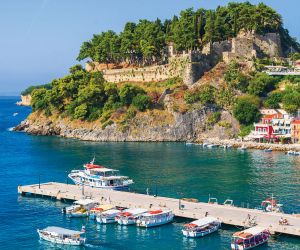
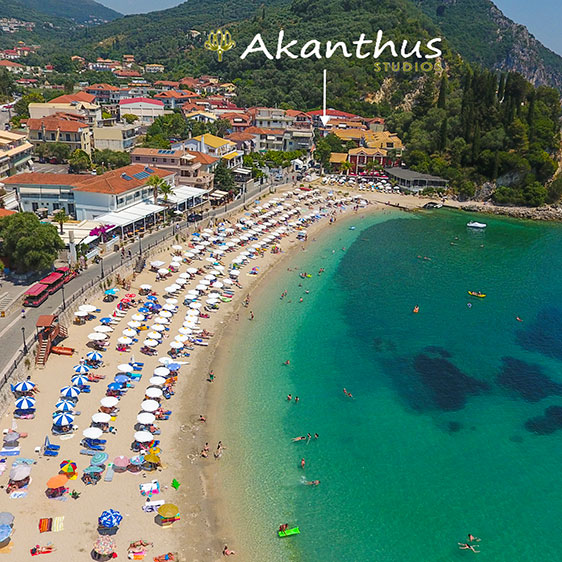
A few metres off Kryoneri beach lies the wooded islet with the church of Panagia. Many people swim over. Boats leave from the pier for the beaches, Paxos and the Acheron.
The chapel of the Virgin Mary stands on the remains of French fortifications, built on the islet in 1808. Weddings are held there every summer, and at night the islet is lit up.
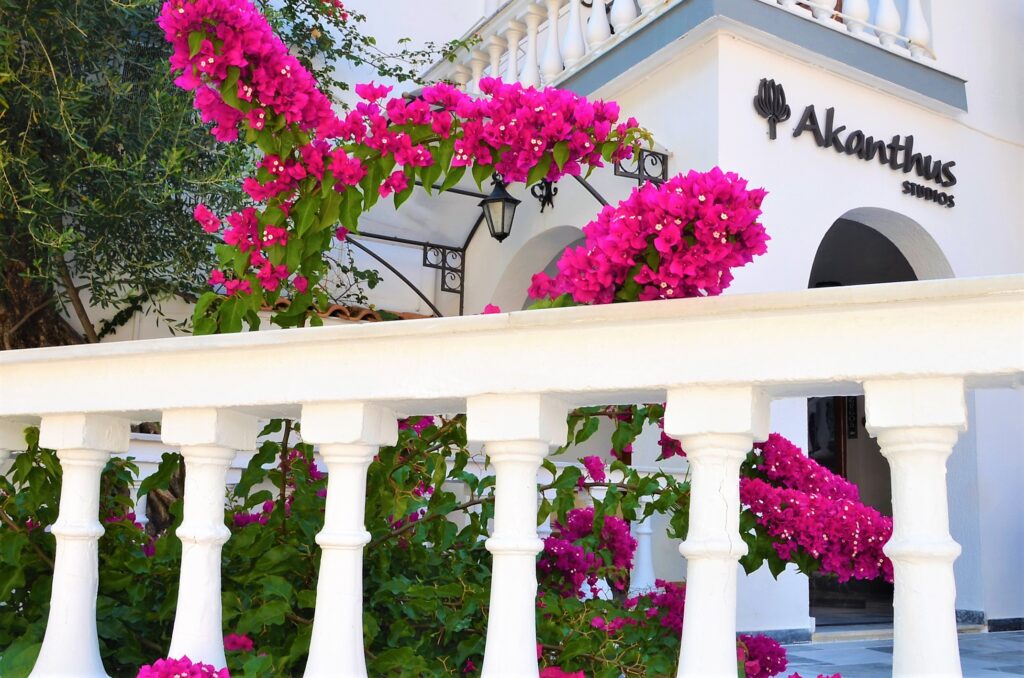
Narrow cobbled lanes between whitewashed houses, with bougainvillea, gardenias and roses, small shops, cafés and tavernas. Best in the late afternoon, when the heat eases.
The old market, Tourkopazaro, is the heart of the old town, with small shops selling local products: olive oil from Parga’s groves and honey.
Most tavernas in Parga are fish tavernas, with fresh fish, octopus and squid grilled over charcoal with olive oil and lemon. You will also find tavernas with home-cooked dishes, vegetables in olive oil and grills. Because Corfu is so close, some menus include Corfiot dishes such as pastitsada and sofrito.
Olive oil is the town’s main product. Take a bottle home from a local mill, and ask the cafés for local honey. For wine, ask for the whites and sparkling wines of Zitsa, from the highlands of Ioannina.
14 August, Kanaria. The festival recalls the return of the people of Parga from Corfu, where they had fled when the town was handed over to Ali Pasha in 1819. Decorated boats arrive at Panagia islet, with music and food.
15 August, the feast of the Virgin Mary. Parga’s biggest celebration takes place on the islet, with music and fireworks.
Concerts and events run all summer. If you want to be here for the August festivals, send us your dates early.
The season in Parga runs from Easter to October. June and September are the most balanced months: warm sea, fewer people and easy access to the beaches. July and August are the liveliest, with the festivals and the full boat schedules. In May and October the countryside is green and ideal for walks and trips to the Acheron.
Sources for the historical details: Greek Ministry of Culture (Castle Route), Encyclopaedia Britannica.
Send us your dates and we’ll reply with availability and price.
We use cookies to make the website work properly and, only with your consent, for anonymous visitor statistics and to show the map. You can change your choices at any time.